Herbal Wisdom · August 2, 2026
The Romans Counted 41 Things Mint Could Do
A first-century list, a famously enthusiastic Roman author, and one herb that somehow ended up responsible for almost everything.
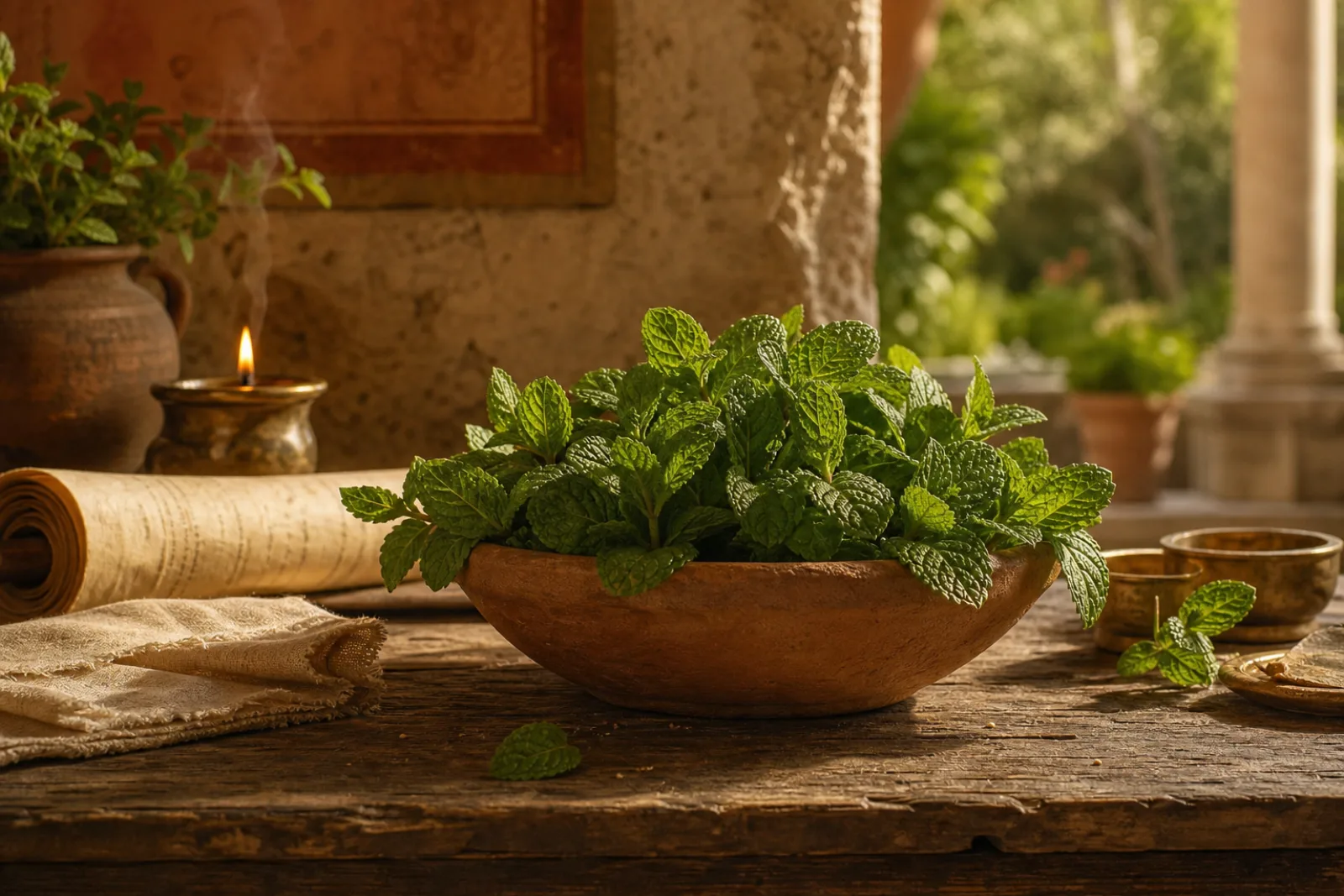
There is a chapter in Pliny the Elder's Natural History whose old English heading reads: “Mint: Forty-One Remedies.” It is the sort of title that makes a modern editor sit up, count twice, and quietly move the medical disclaimer closer to the top of the page.
Pliny wrote in the first century CE. His Natural History gathered observations, earlier writings, household practices, folklore and claims from across the Roman world. It is an extraordinary record of what people believed and did. It is not a modern clinical reference, and this article does not treat it as one.
What Pliny actually tells us
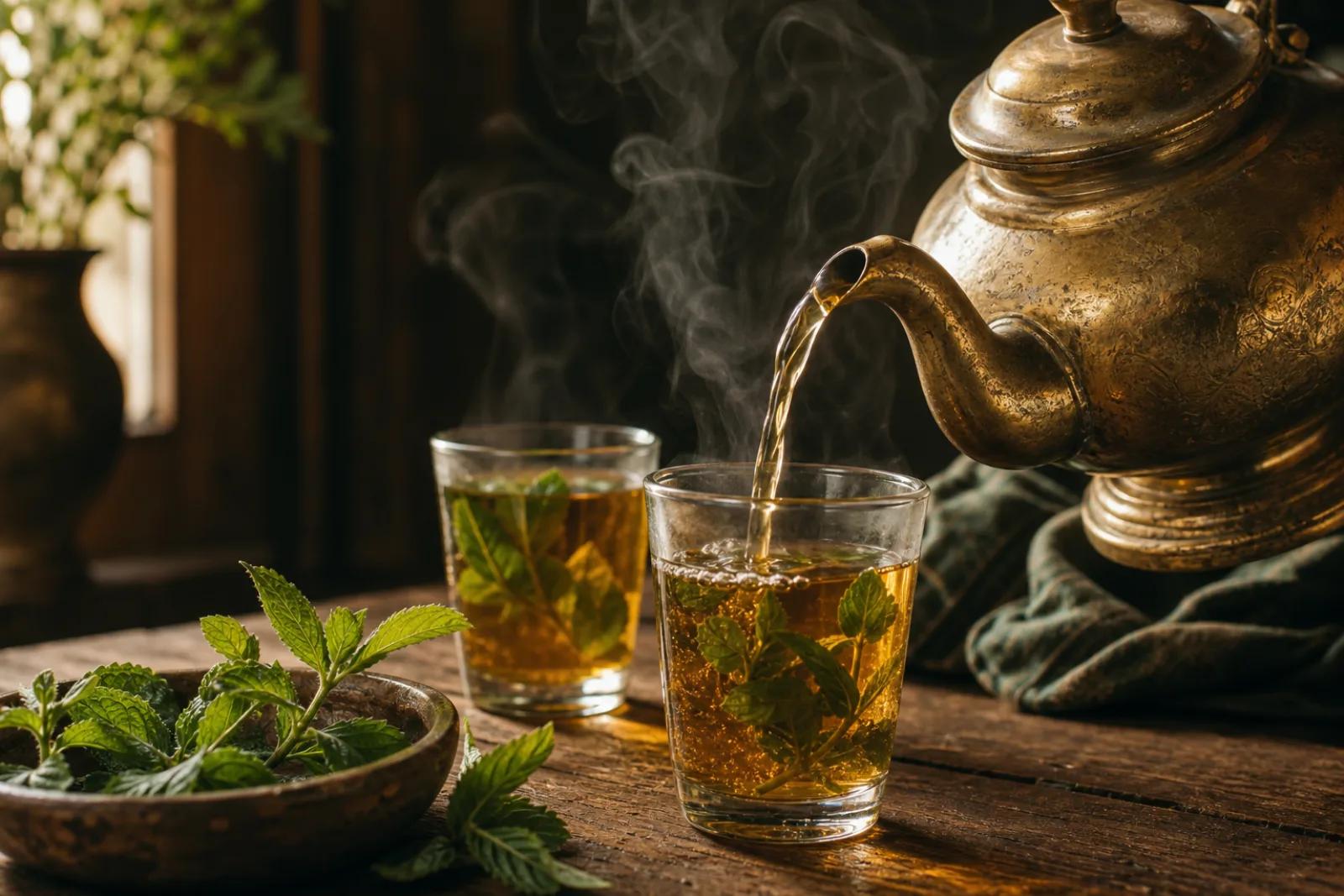
The safest and most revealing part of the chapter is domestic. Pliny says mint's smell lifted the spirits, its flavour gave zest to food, and it was commonly used in sauces. He also describes it being added to drinks. Those details place mint exactly where many of us still know it: on the table, in the cup and close to the kitchen door.
The rest of the chapter becomes steadily more adventurous. Mint is credited with a long parade of medical effects, antidotes and ritual practices. One instruction involves tasting the plant in the garden for nine consecutive days while saying what you would like it to do. Even Grace has limits, and apparently one of them is negotiating directly with a shrub.
Why the number 41 matters
The number does not mean that forty-one benefits were tested and proven. It is a catalogue heading in a nineteenth-century English translation of an ancient encyclopaedia. Its value is historical: it shows how broadly one familiar plant could be woven into Roman food, household practice, medicine and belief.
That distinction is the whole point. History can tell us what people recorded. It cannot, by itself, tell us what is safe or effective today.
The part worth carrying forward
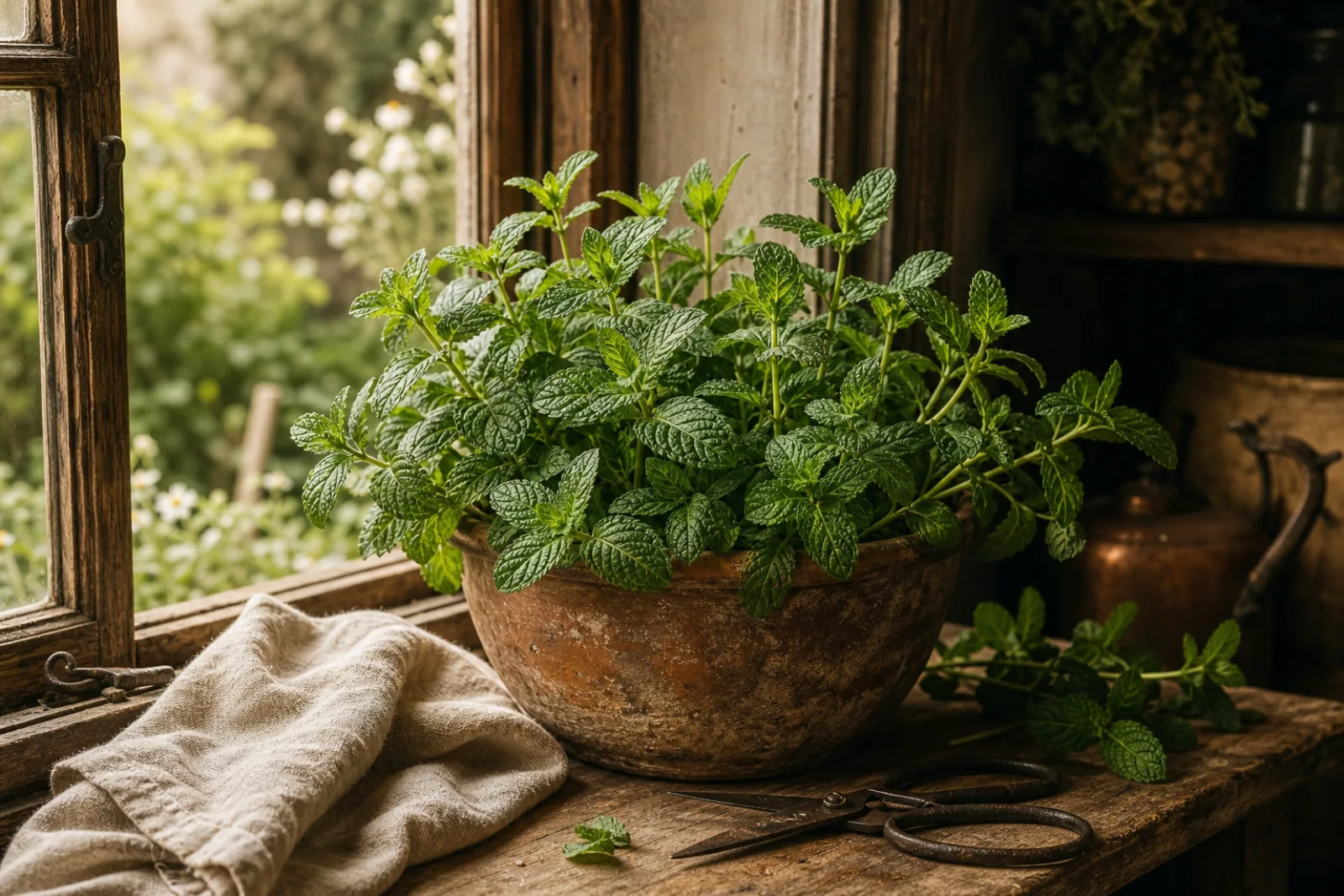
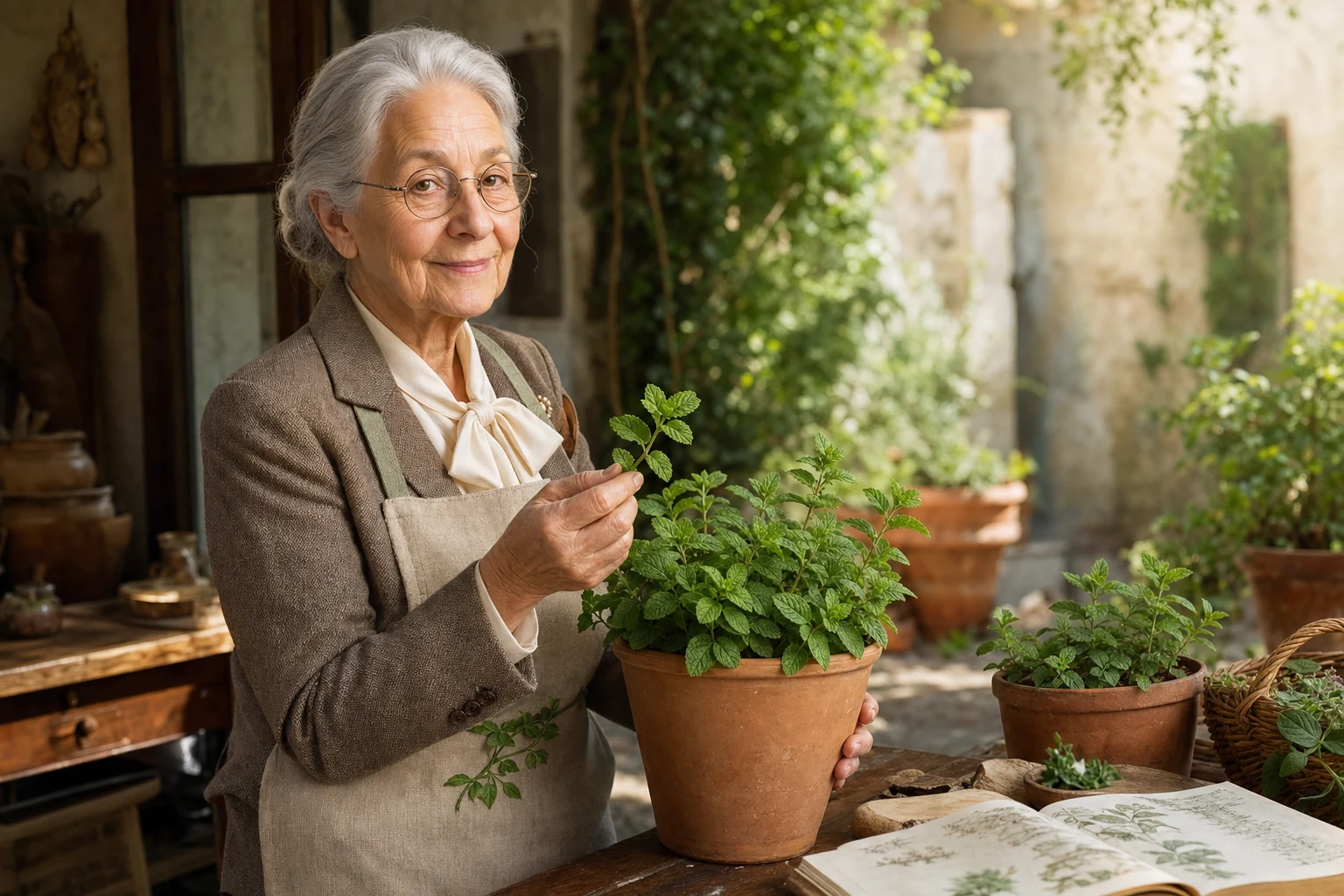
Mint remains a generous culinary herb. It can brighten sauces, salads, tea and summer drinks. Its scent is immediate, its leaves are easy to recognise, and a small amount can change a whole bowl. That is plenty of work for one plant. It does not also need responsibility for sea-scorpions.
Read the source
Primary historical source: Pliny the Elder, Natural History, Book XX, Chapter 53, Perseus Digital Library: https://www.perseus.tufts.edu/hopper/text?doc=Perseus%3Atext%3A1999.02.0137%3Abook%3D20%3Achapter%3D53
Historical and cultural discussion only. Ancient claims are reported as history, not recommended as treatment or medical advice.
Old wisdom. Gentle healing. A life well lived.